

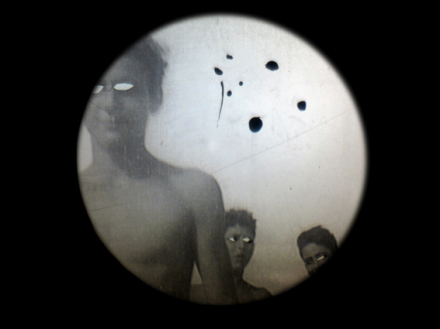
 I came across a very interesting book recently: What is Madness? by British psychoanalyst Darian Leader. In it he looks at madness – and puts forward a new way of thinking about how to think about it. Here is a particularly interesting passage: “Recognizing discreet everyday madness can teach us about the mechanisms that allow psychosis to become stable, and these can then inform our work with those whose psychosis has triggered. The therapist should not be hampered here by conventional views as to how a doctor should treat a patient. They must give up any preset view of what ‘rehabilitation’ or ‘reintegration’ might mean, and learn this instead from the person they are working with. Instead of seeing the psychotic subject… as a container of abnormal biological mechanisms, an investment in dialogue and a curiosity about the logic of that person’s world can open up new therapeutic directions and offer the possibility of change. Therapy can do no more and no less here than to help the psychotic subjects do what they have been trying to do all their lives: to create a safe space in which to live.”
It is a radical way to consider how we encounter our therapist. It seems entirely contrary to what is developing in North America by the psychopharmacologist approach to treatment. Rather than looking for logic, the intent of a psychiatric exam is to lay down a clear diagnosis, and then proceed with treatment – often with the prescription of a drug to treat the symptoms. But getting at the symptoms doesn’t even aspire to getting at the root of things – and that is where these approaches diverge, never the twain shall meet. And it bears some consideration. The notion that biological mechanisms are out of whack is at the heart of the current theory of treatment, and the strange thing is is that the more I investigate this, the more it seems that solid proof of this doesn’t exist. And there are even those who assert that the medications prescribed might be creating chronic conditions. The current medical model of mental illness is that it is a lifetime condition which requires a lifetime of medication. It drives the patient, the one seeking help, into what might be described as a kind of learned helplessness. To buy into the medication model is to necessarily give yourself over to it, and there is little room for doubt. In fact, the expression of doubt is what can lead to the rupture of the relationship between the doctor and the patient.
And this is the crux of things: it relates to human skepticism and to the fixed surety of a psychiatric diagnosis. The fact is if one shows skepticism at that diagnosis, it is likely the relationship between therapist and patient will break down. There is paranoia at the center of every person who has tripped over the line into mental distress – and there is often an extreme reaction against people who are trying to exercise power over you. In one theory, madness is the reaction to the helplessness in coming up against power that is being improperly applied. And the reaction can be either to slip into the helplessness of a depressive episode, or to combat and fall into a manic episode to counteract the powerless you are feeling, which ultimately undoes the struggling person as the mania takes them from effective action into risky and pronouncedly unhelpful interactions. And that is at the center of things: in full-blown depression or mania, you come to a place where something has to be done, and in getting there, you need to be able to step back and accept the help, and that can be the most terrifying thing for the patient.
And that is where the approach which Darien Leader puts forward in his book becomes so appealing. One metaphor he draws for the relationship has the doctor serving as a secretary, and it is in taking the story down, challenging the patient’s narrative where it lets up, or confuses, that the relationship can be most useful and helpful. In that way the relationship serves to bolster the patient’s defense in the story that they tell themselves about their lives. Of course, this scheme differs greatly from the current state of psychiatry practiced in North America. Each subsequent consultation works to narrow down the treatment of the isolated drug regimen. There’s little room for the refinement of the story, for the diagnosis, once made, seldom reconsidered, has become the story, and the drugs treat the symptoms, without a promise of getting closer to a cure. There currently is no cure for psychiatric disorders. These patients who are caught in this system are there to be managed rather than fixed.
Of course, the single most important thing to consider in the doctor-patient relationship is the fact that the diagnosis comes from a set of multiple-choice questions, and that that is the pathology to go on. It is a blunt way to get the story down, to record the patient’s reactions to a series of possible scenarios. There is still no smoking gun, no brainscan that shows definitively one way or the other. There is simply a person in distress, a person for whom pain and confusion has become an overwhelming way of being. And what is striking – in as much as you find people who have similar conditions – is how unique each particular story is. As the classifications of distressing symptoms add up to a profile, there is in the certainty of a diagnosis – you have this, you have that – that you have a story to which your entire experience conforms. It is not the most satisfying approach. The current trend towards psychiatric care has been institutionalized. Insurance companies tend to only cover the pharmaceutical route; if a diagnosed person is not following the pharmaceutical model, disability payments aren’t continued or are challenged. And often that struggle for coverage makes things worse for the person’s suffering. Of course, there are cases in which medication is a necessary part of treatment, a way to defuse a crisis. But we have to get away from the default reflex that they are the only way to go.
Darian Leader’s approach reflects the fact that the patient becomes an active participant in creating a safe place for them to live. And in that way, beyond the rigid system of diagnosis and treatment, the dynamic power becomes more equal, and the uniqueness of each case is taken into account. It is a more difficult way to go – it takes much more time – but perhaps it’s time to recognize that the fix for these painful conditions lies in the realm of creative thinking, and in empowering the agency of the sufferer to sort out why the suffering is happening. It seems a perfectly acceptable way to move forward. It feels like a more enlightened way to go.
 Click on image to ENLARGE and read more...



 Like Us
 Follow Us
 RSS
RSS